
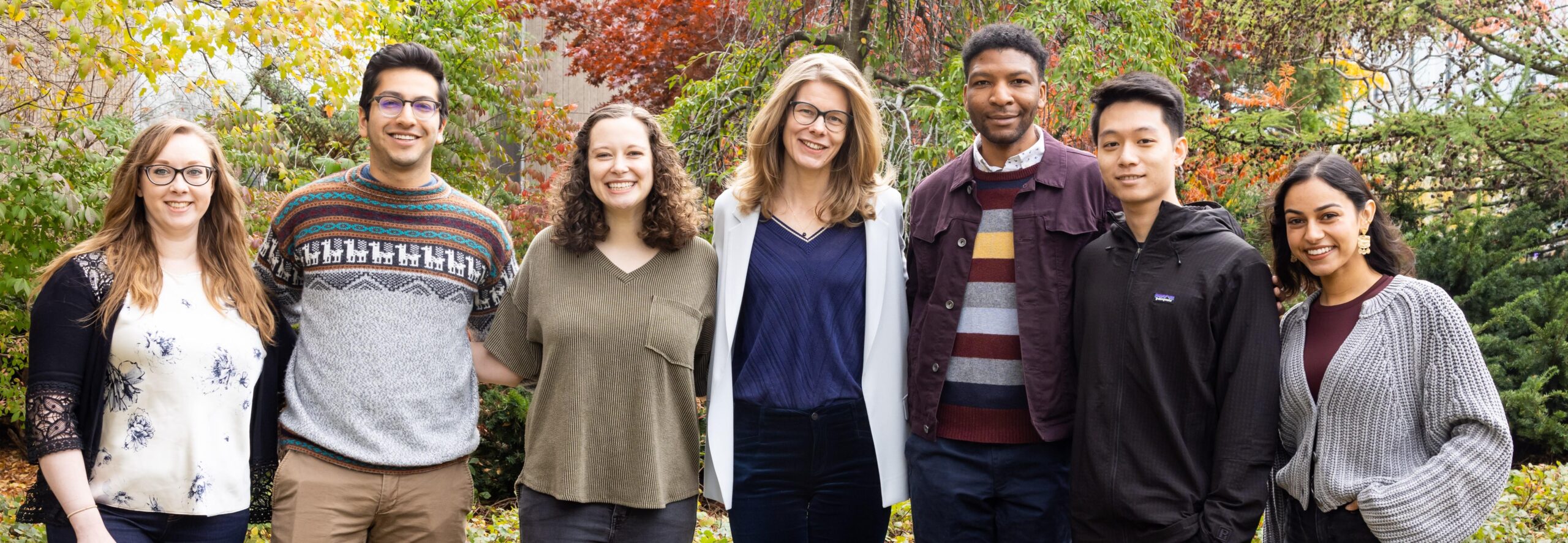
We are a multidisciplinary lab led by Professor Ágnes Horvát at Northwestern University. We study online spaces as complex networks of people, platforms, AI, institutions, and policies. Our work seeks to understand how these systems function, and how they can be designed to be more efficient, equitable, and empowering for all.
News and Updates
- LINK members will present eight projects at the 12th International Conference on Computational Social Science (IC2S2) in Burlington, Vermont. Join us to hear about our latest research and connect with our team.
- Congratulations to Maalvika Bhat on her appointment as an AI Fellow Intern at Seagate Technology in Fremont, CA, for Summer 2026.
- Ágnes Horvát recently delivered a talk on the academic use of social media, LLMs and AI-assisted decision-making at the Northwestern Institute on Complex Systems.
- Congratulations to Katherine O’Toole for being awarded Northwestern University’s Advanced Cognitive Science Fellowship.
- LINK is excited to welcome new Ph.D. student Nick Ornstein to the lab! Nick is co-advised by William Brady (MORS, Kellogg).
- LINK is pleased to welcome Miriam Schirmer as a postdoctoral fellow! Miriam got her PhD from the Technical University of Munich in Computational Social Science, where she received a Dissertation Award.
- Congratulations to LINK-graduate Dr. Henry Dambanemuya for starting his faculty position at the University of Chicago!
Recent Work Spotlight
Quantifying LLM-assisted academic writing
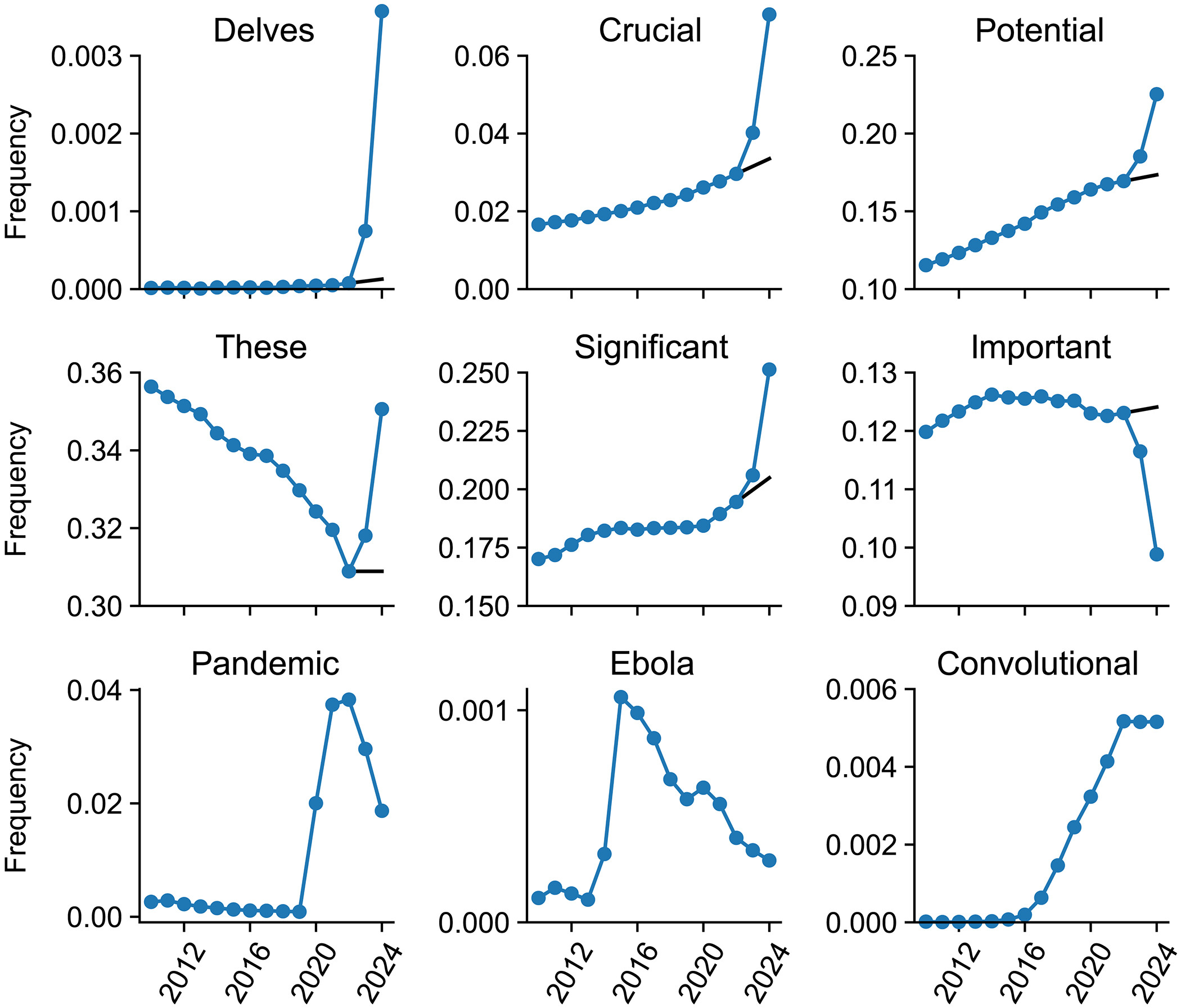
In this Science Advances paper, Ágnes Horvát and collaborators demonstrate that LLMs have had an unprecedented impact on scientific writing in biomedical research, surpassing the effect of major world events such as the COVID pandemic. This paper has received notable press coverage in The Economist, Nature, The New York Times, and Frankfurter Allgemeine Zeitung (FAZ).
The gender gap in scholarly self-promotion on social media
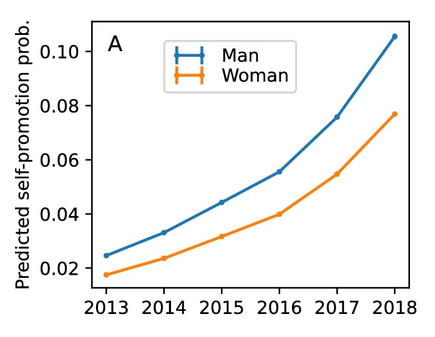
In this paper recently published in Nature Communications and covered by MSN and Psychology Today, Hao Peng, Misha Teplitskiy, Daniel M. Romero, and Ágnes Horvát present findings that reveal how scholarly self-promotion online varies meaningfully by gender and can contribute to a measurable gender gap in the visibility of scientific ideas.
The Persistence of Retracted Papers on Wikipedia
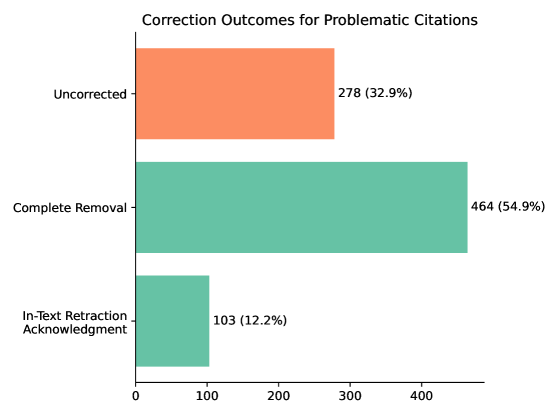
In this paper, accepted to CSCW 2026, Haohan Shi, Yulin Yu, Daniel Romero, and Ágnes Horvát examine how mentions of retracted research are handled on English Wikipedia. They find that 32.9% of the citations analyzed remain uncorrected in the article text. The work will also be presented at IC2S2 2026.